Book Bans at an All Time High

Reading is something we always hope to encourage as educators, leaders, and parents. Bibliophiles everywhere enjoy the very popular Goodreads app which offers recommendations based on genre, book reviews, and challenges to encourage more time spent with literature. Celebrity book clubs and discussions are popping up everywhere online. A favorite best seller will inevitably be made into a movie or TV series. Popular authors are hosting book talks, and signings, and selling out large venues. Significantly, studies show that reading fiction actually fosters genuine empathy. Then why are book bans at an all time high?
Some may feel censorship is necessary to protect our youth from inappropriate content. Although, this so-called protection is often an excuse to ban books with content that makes people feel uncomfortable and fearful. Book bans have become increasingly more prevalent as topics become more and more open. Reasons for bans vary from sexual references, drug use, magic, violence, LGBTQIA+ content, DEI content, religious or political beliefs, racial content, social justice, or simply, strong female characters. The current administration in the White House has taken to censorship in order to get rid of any content containing diversity, equity and inclusion. Books like I Know Why the Caged Bird Sings by Maya Angelou, who received the Presidential Medal of Freedom in 2010 from President Barack Obama, have been removed from the U.S. Naval Academy Nimitz Library as recently as April 2025. It is astounding that diversity, equity and inclusion is considered so offensive!
Last year, PEN America found LGBTQIA+ books such as Gender Queer: A Memoir by Maia Kobabe, at the top of the banned and challenged books list due to content regarding sexuality. When young people feel isolated, wondering if they are “normal” or if they will ever fit in, representation in literature can be comforting. Representation is a doorway to acceptance. Acceptance is often key to lowering suicide rates among at-risk teens. If we cut off access to these books, this probably will not change a person’s sexuality, but it may do irreversible harm. Allowing everyone to read banned books will open minds, and may foster empathy toward the very same marginalized groups that are at the root of the bans. Best selling author Joyce Carol Oates said it best: “Reading is the sole means by which we slip involuntarily, often helplessly, into another’s skin, another’s voice, another’s soul.” Our communities cannot afford to be lacking in empathy.
Undoubtedly, all parents have the right to decide what content they feel is appropriate for their children, but communities should not be deciding for everyone. The American Library Association advises, “banning books for all students constitutes censorship that restricts community access to information.” Freedom of speech is a right afforded to all, or it is worthless. Freedom to read is a right that may be increasingly more important in the information age, as we are responsible for discerning accuracy of what we read, especially online. Stephen King, the most banned author in schools in the United States, urges us, “When a book gets banned, you should IMMEDIATELY run out and read it… Because there’s something in that book someone doesn’t want you to know. When a book is banned, a whole set of thoughts is locked behind the assertion that there is only one valid set of values…” Learning to be empathetic involves taking a hard look at different points of view. Here is where banned and challenged books can provide. Furthermore, reading banned books is arguably the best way to protest censorship!
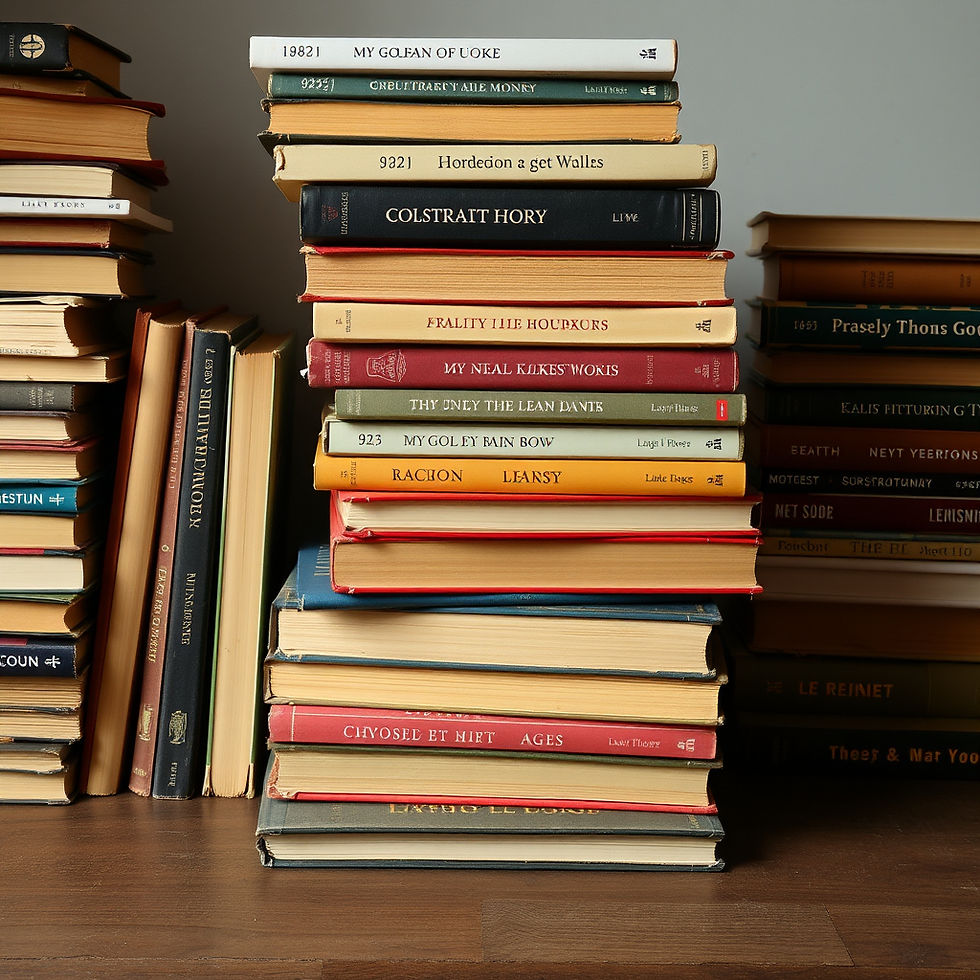
Next time you’re out, pick up a banned book, grab a library card, check out Project Gutenberg online for access to over 75,000 free eBooks, or visit your local Barnes and Noble which has an entire table display of incredible banned books. Then do just what Reading Rainbow host LeVar Burton recommends, “Read the books they don’t want you to read. That’s where the good stuff is.”
From the 2025 PEN America list of banned books, the following contemporary fiction selections are highly recommended by this author: Wicked: The Life and Times of the Wicked Witch of the West by Gregory Maguire, The Handmaid’s Tale by Margaret Atwood, The Kite Runner by Khaled Hosseini, and Water for Elephants by Sara Gruen. For classics, this author highly recommends Alice in Wonderland, by Lewis Carroll; and Frankenstein by Mary Shelley.
DJ Stenson is a local abstract artist who has been inspired to create artwork that celebrates reading banned books.
This article hits the nail squarely on the head. To put it in my own words: Censorship is tyranny. People who seek to control the flow of information are not trying to protect anything but their own fascist ideals. It's a dangerously slippery slope. Vote out the representatves who support book bans and seek to control the media for their own nefarious purposes. A free press is the backbone of a free society. We must be able to decide for ourselves the information we choose to consume. Democracy dies in darkness. I read that in a book.